ACD stands for automatic call distribution. It has become an essential element in making your contact center or call center more efficient through telephony and customer-service software. With an ACD, your calls are automatically routed to the proper channels. This ensures that your customer journey experience flows smoothly and no leads are lost between your call reps and agents.
Today, most dialers have an ACD embedded, but which one you choose should be based on your industry and individual needs. We'll let you know what options are available to you, which features are generally available, and how to pick one based on your workflow.
Looking for a system including ACD? Hooked combines a dialer, CRM, and AI assistance to ensure your calls get sent to the right agent. Book a demo with us today to discover how Hooked can help your sales process.
What is ACD? Automatic Call Distribution Explained

What does ACD stand for? ACD stands for automatic call distribution (ACD), which is a system that routes calls to the appropriate representatives who can answer your questions or address your issues. ACDs will typically work with an interactive voice response (IVR) system; however, that isn't always the case, especially if you have a streamlined workflow.
ACDs streamline your workflow and eliminate the guesswork when new calls and leads come in. We highly recommend investing in one if your call center has multiple departments or a large number of sales representatives.
ACD Meaning in a Call Center
In call centers, an ACD will determine whether or not your customer experience is enjoyable. Determining who a potential customer needs to contact on the first call enhances your customer retention rate.
ACDs also route your calls so you don't have to worry about ensuring your client gets where they need to be.
How Does an ACD Work?
When a call comes into a call center, an ACD identifies the caller, checks whether they are a returning caller, and provides an IVR selection to determine where the call should go. Through the IVR and ACD, the call is routed to the call representative who can answer their question.
If they are a returning caller and you have an integration with your CRM, the customer record will automatically appear on the screen. With an AI integration, all dispositions and notes are logged automatically.
Here's how the flow should go:
- A call arrives at the call center.
- If there is a CRM integration, the caller is identified.
- Callers go through an IVR for the ACD to determine which representative to send them to.
- The ACD routes the caller to the appropriate call representative.
- Call representatives are given the information via the CRM if the integration is set up.
- AI integrations will automatically update your CRM with dispositions and notes.
Call Distribution Methods
There are different ways ACDs decide where to send their calls. Before you invest in an ACD system, make sure it matches your needs. Here are a few of the methods ACDs can use to distribute your calls:
| Method | Explanation |
|---|---|
| Skills-Based Routing | If you have your agents sectioned by tiers, your ACD should reflect their skills. This ensures that the most qualified leads are sent to the most qualified call representative, increasing the likelihood of a sale. |
| Fixed | Distributes leads equally among the different call representatives. Agents receive calls in the same order, regardless of their skill level, meaning everyone gets an equal opportunity to land a sale. Fixed ACDs will always start at the top of the list and continue going down the designated list. |
| Round-Robin | Round-robin ACDs distribute calls through a designated list so every call representative receives an equal amount of time with clients. This eliminates skill evaluations for representatives, meaning every agent receives an opportunity to sell. |
| Priority | If a lead has called multiple times or has been designated as a high-quality lead, priority ACDs will send them to an agent dedicated to their situation. |
| Simultaneous | Rings every available agent at once. This reduces the time a lead or client waits in the queue, but there is no guarantee they'll be connected to the right representative. |
Choosing which ACD method you'd like depends on what's in your customer journey map. If you'd like the time spent waiting on hold to decrease, simultaneous ACD would be the best option. On the other hand, if your goal is to direct leads toward your top-tier talent, it is better to use round-robin or skills-based ACD configurations.
Some ACDs will even combine different methods to ensure leads are evenly distributed and sent to the most qualified agent. Always ask what methods they use when you book a demo of their ACD.
Key Features of an ACD System
While each ACD is different, they should have these basic features within their system. If they are missing any or aren't planning to include them in the future, you should invest in a different ACD system.
IVR Integration
Interactive voice response (IVR) systems generally request input from the lead when they originally call in. The IVR identifies the caller's intent through their verbal answers or keypad entries, allowing the system to route them to the appropriate channel.
ACDs and IVRs work together to ensure you can field calls, so integrating them is vital to your business's health. If you're using an IVR, check with your provider and ensure that it can communicate with your proposed ACD.
CRM Integration
Customer relationship management (CRM) platforms are the lifeblood of call centers. They manage your clients and prioritize tasks for your agents within their process. For your ACD to recognize incoming calls, it'll need to pull from your CRM database, so having an integration with your CRM becomes essential if you want your ACD to function properly.
However, if your dialer and CRM are bundled together, you won't have to worry about ACD integration, since it is typically included.
Call Queues
ACDs were created to manage your call queues, but not all ACDs are created equal. Take a look at your customer's journey and identify when agents are unable to provide the proper information. Depending on how often this occurs, you'll want to change your workflow or invest in a new ACD.
Reporting & Analytics
If your ACD is already connected to your CRM, you should be receiving reports and analytics. However, at a minimum, your ACD should capture call information and provide statistics on each call representative or agent.
If your CRM isn't already providing this information, it is vital data for indicating your agent's status and identifying who might need additional call center training.
Omnichannel Support
Depending on the industry you're in and the demographic you're targeting, contacting your customers via phone may not provide the intended results. That's why having an ACD that can manage not only calls, but also SMS and email, can be helpful.
Of course, if you're only seeking call center solutions, then you may not need to worry about omnichannel support.
Call Monitoring
For managers and supervisors, monitoring calls via the ACD can help route leads to agents. Having a CRM that allows managers to adjust the call queues can also maintain the order needed to balance your leads and agent availability. Especially if you're managing several agents and facilitating hundreds of calls, this system is essential to your business's health.
AI-Powered Routing
AI ACD routing has become an efficient way to ensure clients are sent to the right representative. If you have an AI assistant, it should diagnose the caller's situation and route them appropriately. It can do that by asking leading questions and evaluating customer sentiment.
This is typically an additional feature for an ACD, so you should ask if it is available within your own integrations.
How an ACD Works With Your CRM
If you have an integration between your ACD and CRM, you'll have access to customer information as soon as the call representative answers the phone. When the caller comes in, the CRM identifies them, and the ACD routes the caller to the appropriate representative.
When there is no integration set up, you risk having duplicate data and providing no context to your representative. It's a disconnect you can't afford in sales or customer service, since you risk ostracizing your community.
How Do ACDs and IVRs Work Together
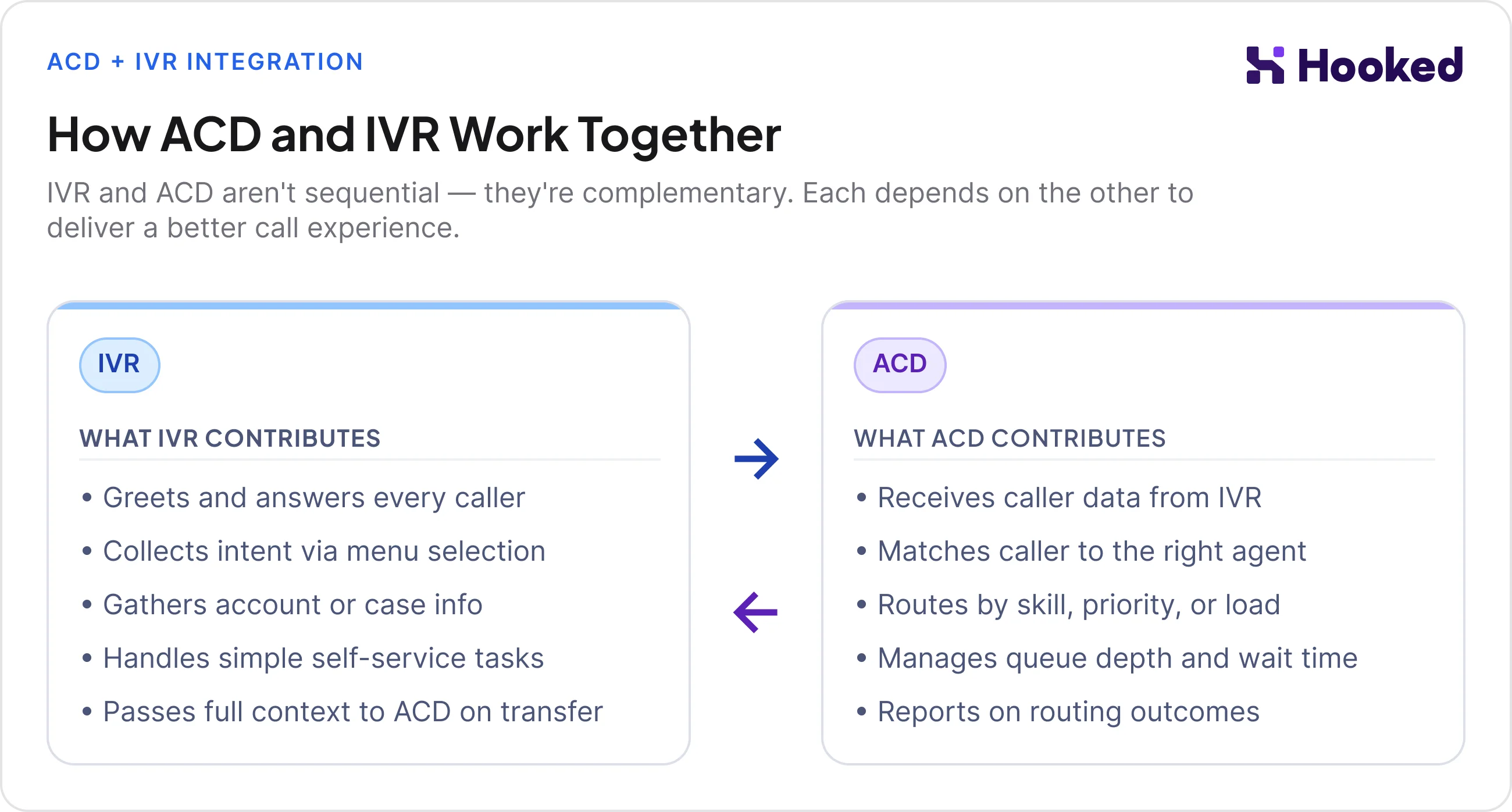
The collaboration between ACDs and IVRs is key to making sure calls reach the most suitable representatives. Typically, an IVR asks your clients questions to identify their primary problem.
The IVR relays that data to the ACD, which determines the final call destination. These systems work in tandem to ensure your customers receive the care they need.
Benefits of Using an ACD
Automatic call distribution systems have many benefits for you and your customers. Essentially, you will deliver the best outcomes for your customers through customer sentiment analysis and IVR integrations. Here are just a few of the benefits you can expect from an ACD system:
- Shorter Hold Times
- Higher First-Call Resolution
- Agent Utilization
- Personalized Caller Experience
- Visibility for Supervisors
Each of these can increase your team's efficiency and unlock your team's potential.
What to Look for in an ACD System

Before you purchase an ACD system, you should evaluate exactly what you need from a call distribution service. Here are a few items you should consider:
Routing That Matches Your Workflow
Everyone's workflow is different, so choosing an ACD to match your process is an important decision. Perhaps you've noticed that your current distribution setup isn't working, or you'd like to improve how your calls get closed. These are important considerations you should contemplate before making a decision.
Choosing the wrong call routing system can affect your downline and your employees' morale. Before making a decision, review what would be best for your business.
CRM Integrations & Reporting
Are you currently using a CRM? CRMs are great lead management tools for tracking all your lead information and ensuring they become lifelong customers. So, if you're using a CRM, you'll want your ACD to integrate with it to ensure no data gets lost.
Of course, the best solution is an ACD with a dialer and CRM automatically embedded in its system. This ensures every tool is talking to each other and communicating the information needed.
Ease of Setup
Complicated systems rarely get adopted by call representatives and agents on the ground. For call tools, such as an ACD, to be used effectively, they must be simple for all levels. In an ACD's case, how complicated is the distribution of leads to your call representatives? If you can't explain it in ways that everyone can understand, it might not be the right system for you.
How Hooked Works as an ACD

Hooked CRM integrates a dialer and AI assistance to facilitate your calls properly. Hooked utilizes a round-robin approach with our automatic call distribution system to ensure every agent gets an opportunity to sell. If you'd like a tiered, skill-based ACD, you can categorize your calls into campaigns and assign them according to your team's skill level.
This is the best method for managing calls in the life insurance industry. At Hooked, we are always looking for ways to improve your sales, and that starts with care for your customers. Our system was developed to build relationships with your clients at every step of your workflow.
If you're interested in leveling up your workflows, book a demo with us today. We'd love to walk you through our unique process and show you how Hooked upgrades your business.