Sales performance management (SPM) is using data to drive plans and coaching for representatives. Sales managers use these statistics to shape their call center training and set goals. It’s vital to know which SPM metrics to track and when, so your business stays relevant with your clients.
We’ll show you how to build a sales performance management system that corresponds to every stage of your business. Plus, we’ll go through the KPIs that matter, how to track them with your CRM, and the secrets to unlocking the next level at your business.
Looking for a CRM that’s built for sales management? Hooked CRM combines all the elements of a CRM with a built-in dialer and AI assistance that keeps your agency moving forward instead of writing notes.
What is Sales Performance Management?

Sales performance management (SPM) uses concrete data to guide your agency’s next steps. SPMs focus on prioritizing a company’s revenue and the changes that increase those statistics, which makes it especially important for sales-driven companies. What each company tracks will differ by season, sales force, and agency tools; however, each should increase your KPIs.
Why Sales Performance Management Matters
Sales performance management is the backbone of your sales business. If you run a sales company, focusing on sales performance management tools helps you increase sales potential and identify the adjustments you need to make. If increasing sales is a priority, SPM is vital to your success.
Components of Sales Performance Management
You should take these steps for a successful sales performance management system:
| Step | Explanation |
|---|---|
| Planning | The start of your sales performance management. Here’s where you’ll determine which KPIs to track and how to record their performance. |
| Quotas & Territories | After the initial research phase, you’ll choose a feasible goal for your agents. Assign different goals to each team based on predetermined factors. |
| Incentive Compensation | Having compensation based on sales team performance is an industry standard. We recommend setting a compensation package that encourages representatives to excel. |
| Performance Tracking & Analytics | Once those standards are set, managers track representatives’ performance and ensure they meet their KPIs. |
| Coaching | After a set period, review the agent’s performance and coach them on ways to improve their technique. |
Every company is different, so your priorities could change depending on your needs.
Sales Performance Management vs. Incentive Compensation Management vs. HR Performance Management
Sales performance management focuses on improving revenue-related KPIs. However, if you want an even more comprehensive view, consider incentive compensation management and HR performance management.
Incentive compensation management is similar to SPM, but it focuses on the compensation agents receive for reaching their KPIs. HR performance management oversees the broader goals and evaluations across several employees.
Sales Performance Metrics to Track

There are plenty of call center metrics to track when reviewing sales performance. Depending on your business, you’ll track different KPIs. Here are a few of the KPIs to review:
- Calls & Dials
- Talk Time
- Contact Rate
- Appointment-Set Rate
- Close Rate
- Average Deal Size
- Quota Attainment
- Pipeline Coverage
- Sales Cycle Length
Manager-Level KPIs
Manager-level KPIs ensure your workflows run smoothly. Team leaders and agency admins should review their own KPIs and make strides to improve their process. Here are a few KPIs managers should reference for themselves:
- Team Quota Attainment
- Coaching Sessions Completed
- Representative Ramp Time
What a Good Sales Performance Dashboard Shows
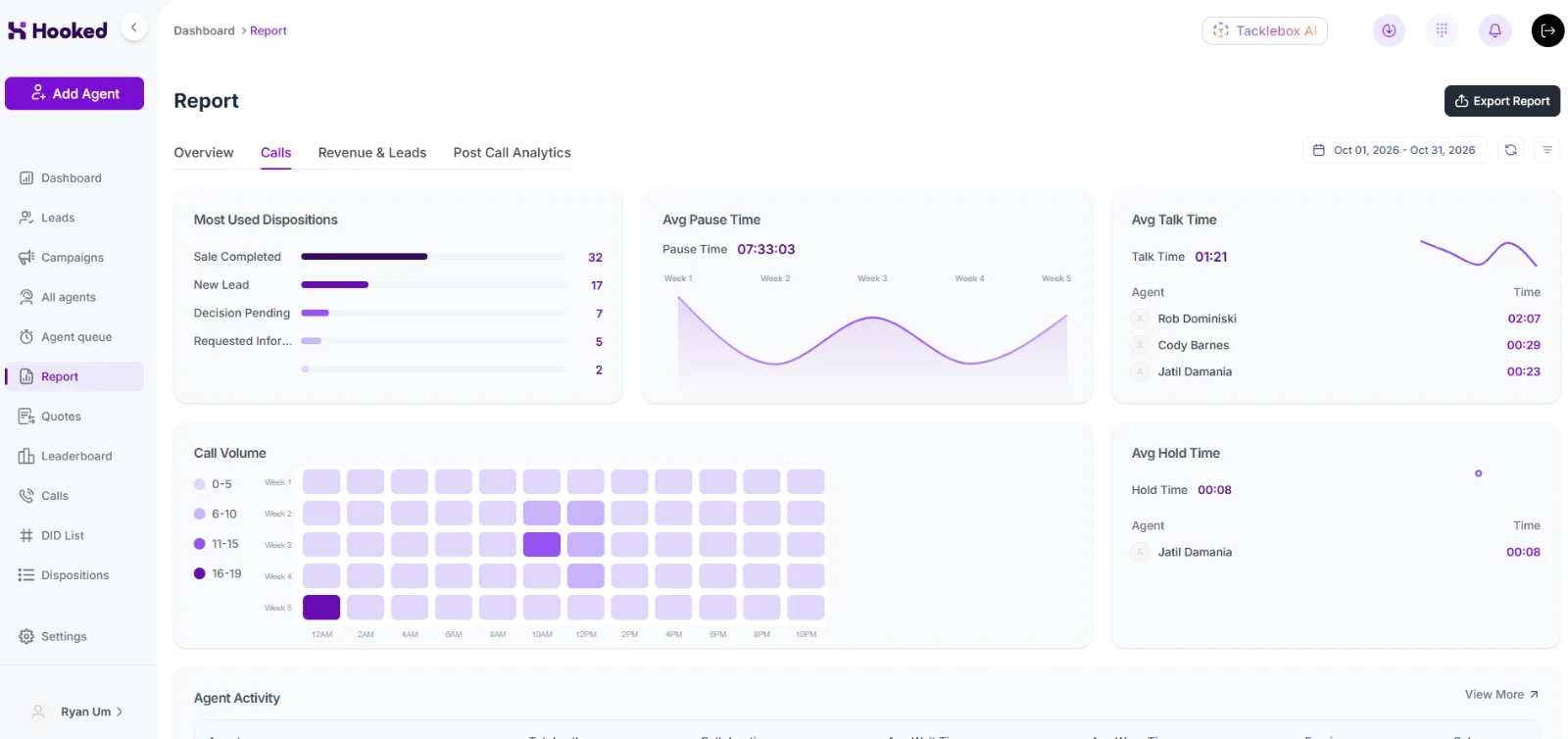
A good sales performance dashboard shows each KPI managers track: sales, calls, closing rates, appointments made, etc. These provide clear insight into each agent and more detail when asked.
We also recommend one that’s customizable, keeping the focus on the metrics you want to improve.
How to Build a Sales Performance Management Process
Building a sales performance management system will be different for every company. However, having one gives your agents a clear understanding of their improvement workflow. Here are the steps you should take to craft a management process that works for your team:
- Set Goals: Determine realistic goals for your call representatives.
- Choose a Small Metric Set: Fine-tune the goals you set to see which KPIs are worth pursuing.
- Automate Data Collection: Integrate your dialer and CRM systems to capture the data.
- Customize CRM Dashboards: Configure your CRM dashboard to display the metrics you’re tracking.
- Set Review Cadence: Determine how often you’ll be evaluating the data and pulling information.
- Coach Via Data: Managers should coach agents and help them improve their workflows.
- Revisit Quotas & Incentives: After coaching, managers should re-evaluate the quotas and incentives set and adjust as needed.
A Sales Performance Review Cadence that Works
Setting a proper sales performance review cadence keeps agent morale up. Choosing a cadence that’s too short can cause you to make changes too quickly, giving representatives less time to adjust to new workflows. However, waiting too long can lead representatives to develop bad habits and use processes that undermine their performance.
Generally, managers should review the sales performance cycle weekly with a monthly check-in on representatives. However, if your income or customer sentiment changes significantly, managers should evaluate sooner rather than later. With an easy-to-read dashboard, you can see when your agents need help immediately.
Use Performance Data to Coach Reps

The best way to coach your call representatives is to use CRM data. Through call recordings, your CRM should provide an in-depth call analysis. If you have AI integration, you can use AI sales coaching to enhance your call center training. This gives your managers more actionable insights, improving your calls from an unbiased perspective.
Managers should review AI analysis to ensure call center quality assurance, but if you’ve tailored your AI to the KPIs you want to improve, it will provide the insights you desire.
When to Use Sales Leaderboards
Supervisors and managers use sales leaderboards to identify which representatives need more training and to set reasonable quotas and incentives. Leaderboards should be used daily to track outliers who are underperforming or exceeding expectations. Plus, if you’re running contests for your call center business, you can track statistics at a glance.
A functional leaderboard is customizable for your business, so you won’t be inundated with information you don’t necessarily need. When you book a demo, check to see if the leaderboards will show you the proper statistics.
Common Sales Performance Management Challenges
The most common sales performance management challenge is focusing on too many KPIs at once. Sales performance management works best when one or two performance metrics are tracked. Focusing on too many metrics splits your priorities and creates expectations leading to disappointment.
Here are a few more challenges you can encounter when improving your sales performance management metrics:
- Plan Misalignment: Ensure that your plans are set to improve performance.
- Inconsistent Plan Review: Always review your plans at the proper cadence.
- Tool Sprawl: Having too many tools can muddle your process and cause you to chase statistics.
- Data Entry Fatigue: Relying on your representatives to properly submit metrics you’re actively tracking can get messy.
What to Look for in Sales Performance Management Tools
Ideally, your sales performance management tool should be an all-in-one program, showing exactly which metrics you’re tracking to improve your KPIs. The dashboard should summarize the business’s health and display real-time activity.
Generally, a CRM that’s integrated with your other call-related tools is enough for sales performance managers. A proper CRM can be customized to your needs and determine next steps. Metrics should update in real time, so managers can adjust as needed.
Every business is different, so consider what your needs are and choose programs that best fit your overall goals.
How Hooked Supports Sales Performance Management

Hooked CRM is the all-in-one sales management software that includes leaderboards, goal tracking, real-time agent activity tracking, call transcripts, and custom reports. Plus, we have a fully integrated AI assistant, Tacklebox AI, that builds reports and provides actionable insights.
Book a demo with us today, and we’ll show you how Hooked CRM upgrades your business and sales performance management.
Frequently Asked Questions
SPM stands for sales performance management.
Sales performance management is assigned to managers and administrators.
You should review sales rep performance at least once a month. However, each business is different, so you may see yourself checking performance metrics at a higher frequency.
The top three KPIs will differ depending on the business, but the most common metrics we've seen tracked are revenue, time spent talking to customers, and number of calls made.
SPM is not just for large companies. Small businesses use SPM to set goals and motivate employees.